
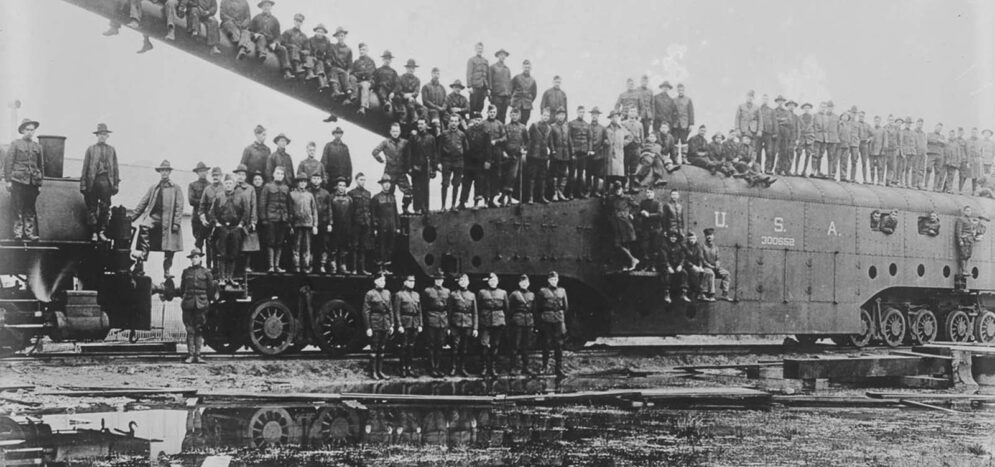
Few steam locomotives are as inseparably linked to the extremes of the 20th century as the Baureihe 52. It was not the product of technical elegance or long-term planning, but the result of a historically exceptional situation.
The BR 52 did not emerge from a desire for progress, but from the necessity of functioning under the most adverse conditions. It is a technical testament to an era in which efficiency, simplification, and mass production mattered more than longevity or comfort.
Developed for War
The Baureihe 52 was developed from 1942 onward as a so-called war locomotive. The goal was to produce a powerful freight locomotive with the least possible use of materials and labor.
Numerous simplifications defined its construction:
- reduced equipment
- simplified components
- lower material quality
- focus on fast and cost-effective manufacturing
The locomotive was meant to work — reliably enough for deployment, but with no regard for a long service life.
Engineering Under the Dictates of Scarcity
Compared to its predecessors, the BR 52 was deliberately kept simple. Technical sophistication gave way to practicality.
Nevertheless, it was capable enough to move heavy trains under difficult conditions — in cold weather, with inadequate infrastructure, and under heavy load. It was precisely this combination of simplicity and performance that made it one of the most-built steam locomotives in Europe.
A Tool of Logistics – With a Heavy Legacy
The operational history of the Baureihe 52 is inseparably tied to the Second World War. It served the transport of goods, materials, and troops across great distances.
At the same time, it is a reminder that railway infrastructure is not neutral. Trains were used not only for supply and mobility, but also for forced measures and deportations. In this context, the BR 52 represents the technical side of a system whose human consequences are still felt today.
This history demands a sober, responsible perspective.
After the War – Continued Use, Continued Burden
After 1945, the story of the Baureihe 52 did not end. On the contrary: in many European countries it remained in service for decades.
In Eastern and Central Europe it was modernized, rebuilt, and reused — for lack of alternatives. What was intended as a stopgap became a permanent part of railway operations.
In this way, the BR 52 became a link between war and reconstruction.
Images Between Cold, Vastness, and Improvisation
Photographs of the Baureihe 52 show a different railway world than that of the pre-war or postwar economic boom era.
They depict it:
- in snow-covered landscapes
- on endless stretches without visible settlements
- often heavily marked by use
These images feel austere, sometimes bleak — and that is precisely where their documentary power lies. They show railways not as a symbol of progress, but as a necessary function under extreme conditions.
The Baureihe 52 in the Archive
In the archive, the Baureihe 52 is not an object of admiration, but of contextualization.
Our metadata captures not only technical details, but also temporal and geographic context. Regions of deployment, years of construction, postwar modifications, and historical circumstances are deliberately recorded.
This keeps the BR 52 understandable — not in isolation, but embedded in its time.
Why the BR 52 Matters Today
The significance of the Baureihe 52 does not lie in its beauty or technical sophistication. It lies in what it stands for.
It represents:
- industrial simplification under compulsion
- the role of technology within political systems
- the transition from destruction to reuse
Those who study the BR 52 engage with railway history without romanticization.
Conclusion
The Baureihe 52 is a locomotive that compels reflection. It shows how technology is born under extreme conditions — and how it endures.
Its images remind us that railways do not only signify progress, but also responsibility. For that very reason, the BR 52 belongs in every serious railway archive.
1. They Redrew Political Boundaries — and Strengthened National Identities
The rise of rail networks in the 19th century often coincided with nation-building. In Germany, for example, regional lines like the Bavarian and Prussian systems eventually merged into an imperial network, symbolizing political unification. Railroads didn’t just follow borders; they shaped them, reinforcing a shared sense of identity through connected economies, military readiness, and cultural commonality.
2. They Fueled Industrial Expansion
Europe’s industrial centers were often built around the arteries of rail. Coal mines, steel factories, and textile mills thrived because they had rail access — allowing raw materials in and goods out at previously impossible speeds. Cities like Manchester, Essen, and Katowice grew from industrial towns into national powerhouses in part due to railway logistics.
3. They Changed the Geography of Everyday Life
Before railways, travel between towns was measured in days. Rail cut that down to hours — and suddenly, rural farmers could access city markets, while city dwellers could escape to the countryside. This shift altered everything from food prices to newspaper circulation. The rhythm of life changed — timetables, train whistles, and connections began to define the pace of society.
4. They Brought Tourism to Life
The idea of vacationing wasn’t viable for the middle class until trains made distant regions accessible. The Alps, the French Riviera, and spa towns like Baden-Baden or Karlovy Vary became reachable. Tourism as a structured industry was born — and with it, guidebooks, luggage sets, and a new kind of cultural exchange.
5. They Were Instruments of Empire — and Resistance
Colonial powers used rail to exploit and control, both at home and abroad. In Africa, India, and Southeast Asia, European-built railways often served imperial resource extraction. Within Europe, however, rails also became a way for resistance movements to organize, disrupt, and escape — particularly during wartime. In this sense, the railway was both a tool of oppression and liberation.
6. They Played a Central Role in War — and Peace
From WWI troop movements to WWII deportations, Europe’s darkest and most complex moments were often carried out via train. But railways also carried displaced persons home, reunited families, and helped rebuild shattered economies in the aftermath. The Marshall Plan, for example, was physically implemented through Europe’s rail infrastructure.
7. They Made the Continent Smaller — and the Union Possible
Modern high-speed rail systems like the TGV, ICE, and Eurostar helped turn Europe into a single, semi-borderless market. Students studying abroad, workers commuting cross-border, and travelers hopping between capitals — the train network has supported everything the EU stands for: cooperation, mobility, and shared opportunity.
In short: Railways weren’t just infrastructure — they were one of the most transformative forces in European history. To study them is to understand the continent’s very shape, story, and soul.